Drew and Judy Wickman
Drew and Judy Wickman moved to Death Valley Junction with their two children in the summer of 1974 and opened Amargosa Pottery, making and selling ceramics. Drew’s brother had gone to school with Peter Simon who was interested in purchasing the town from the estate of Ettie Lee, the owner who had died that year. The arrangement they had was that Drew would help make repairs and improvements to the hotel in exchange for reduced rent on the old dormitory in the north wing of the civic center. This building had previously been occupied by Tom and Diane Ryan, who had operated a barber shop and boutique there. Drew set up his kiln behind the building. He made his pieces using local materials that he found. The area has abundant deposits of clay and borax, which he used to make glazes.
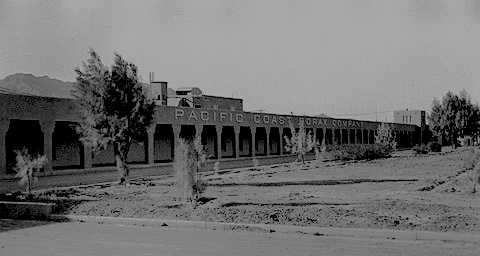
The 50 year old hotel was in need of a lot of repairs. Peter installed a new electrical service and wired the rooms for air conditioning. The theater also got a new electrical panel and wiring. Drew helped to install tile on the floor of the lobby and dining room, and to build a concrete curb along the outside wall under the colonnade to help keep out the periodic floods that went through the town. Keeping the drains flowing was a constant challenge. The tamarisk trees that were planted around the hotel are particularly skilled at finding water so their roots are always growing into the sewer lines and blocking them.
A swimming pool had been constructed in the square in front of the hotel in the 1960s. Made from unreinforced cinder blocks and mostly above ground, it had quickly fallen into disrepair.
The telephone service was primitive. There was a single party line into town. Only one call could be in progress at a time. An incoming call would cause all the phones to ring a certain number of times. Each residence had a designated number of rings, so if your number was three and the phone rang three times, the call was for you. Otherwise it was for someone else. To make an outgoing call required getting the attention of an operator who was hundreds of miles away and asking her to make the call for you. The telephones were powered by batteries and when the batteries ran down, your phone didn’t work. Drew installed a power supply for their phone that plugged into the wall so their phone always worked.
Judy worked in the hotel dining room. Later she taught at Death Valley Elementary School in Cow Creek that their children attended, and also drove the school bus. In 1977, their daughter was employed with several other schoolmates as extras in Star Wars.
Marta Becket, by her own account in her autobiography To Dance on Sands, did not connect well with the other people living in town. “Everyone in town was friendly, but regarded us with curiosity. These were rural folk, and we were from the big city.” Tom Williams did a bit better at socializing, but apparently he also felt he was superior to the locals.
The people who were living in DVJ when Marta Becket arrived who she mentions in her book were moving away or dying off. Howard “Smitty” Smith who had run the gas station had died in 1973. Don Martinsen and his family, who had been living in the two story superintendent’s house, abruptly left town abandoning their dogs and horses. Tom Williamson shot the dogs. Tom Bridges, who had run the hotel with his wife Mazie, died in 1975. Drew helped bury him in the DVJ cemetery.
Other people in town included George the handyman, Al Bell the postmistress who lived in a trailer with another woman who ran the general store, and a woman named Rose who was known as the “stick lady”. She lived in one of the houses and was supported by her family who would drop off groceries at her house, but avoided contact with her. She never talked to anyone and always carried a stick with her when she was out.
In 1976, the town was sold. The original 280 acres owned by the borax company had been subdivided in 1971 and four lots of approximately 18 acres at the northwest corner around the intersection of highways 127 and 190 had been sold. Of the remainder, a parcel consisting of just the theater and the adjacent building where Marta and Tom lived was sold to their non-profit, Amargosa Opera House, Inc. The rest was sold to Peter Simon’s Death Valley Junction, Inc.
The Wickmans closed Amargosa Pottery and moved from DVJ when their rent was raised in 1978. The hotel was apparently not profitable. In 1979 it closed and would not reopen for another 20 years. Later that year Peter sold the town to Marta and Tom.