Death Valley Junction History Project
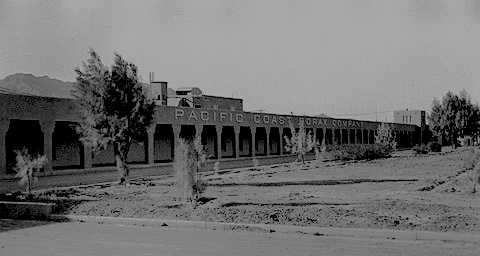
Death Valley Junction is a small unincorporated desert community in California near the Nevada border. It began in 1907 as a railroad junction that was constructed by the Pacific Coast Borax Company to transport borax ore to market.
It is most famous for Marta Becket's Amargosa Opera House. Marta's story has been well documented, but far less has been written about the 60 years that preceeded her arrival.
Here is the story of the town, from the very beginning, up to the present day.
Some former residents were kind enough to share their stories and personal photos.
There is a fair amount of misinformation and lore about the town that gets repeated which is definitely not true.
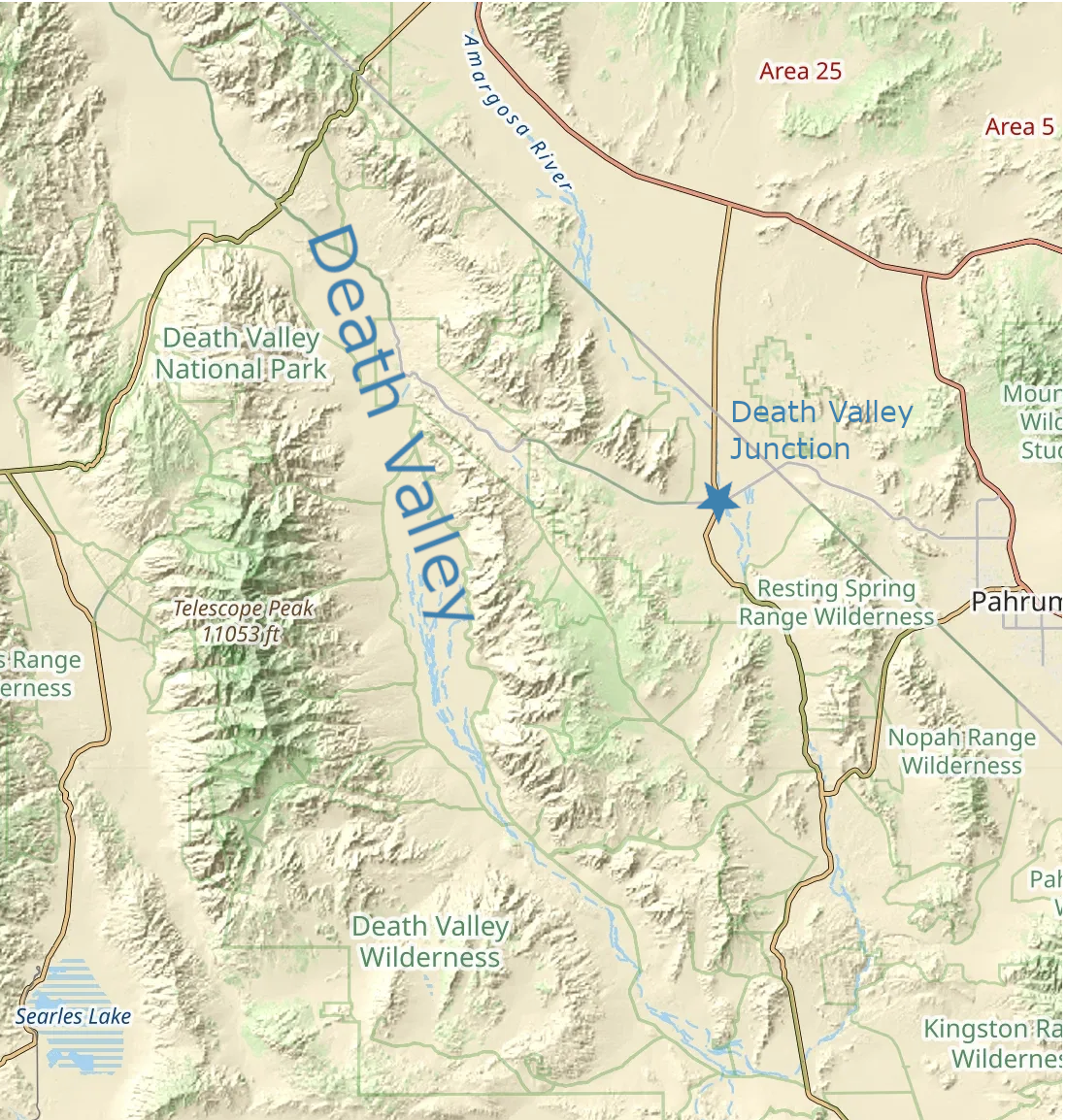
Death Valley Junction is not actually in Death Valley. It is in the Amargosa Valley which is just east of Death Valley. It is located at what was the junction of the defunct Tonopah & Tidewater railroad and a spur that went west to a borax mine near Death Valley.
There is no evidence that there was any town, settlement, or crossroads at the site before the railroad was constructed in 1907. The particular location is due primarily to engineering considerations of railroad construction. At first, it was little more than a telegraph station at the junction of the main railroad line and the spur that went to the Lila C. borax mine. The borax company did not initially plan to build a town there.
The the community has never been called anything other than "Death Valley Junction". Books, oral histories, legal documents, and contemporary newspaper articles always referred to it as such, never "Amargosa". It has never been officially incorporated as a town. The name of the post office was designated as "Amargosa" for a short time by the Postal Service in the early 1960s, but it was changed back to "Death Valley Junction" a few years later.
The famous 20 mule teams were used to transport borax from Death Valley south to railroads in the late 1800s before Death Valley Junction existed. When the Tonopah & Tidewater Railroad was constructed in 1907 it made the mule teams obsolete and they weren't used after that. The mule teams never came to or through the town, however the old borax wagons were displayed there for a number of years.
The mines were still producing, but the Pacific Coast Borax Company moved their operations in 1928 because an abundant supply of borax was discovered in another place that had greatly reduced transportation costs which was a compelling econonomic incentive. They didn't abandon the town, however, but rather operated the hotel, cafe, gas station, and store for many years before selling it. The most prosperous years of the town were in the 1930s, after borax was no longer mined or processed in the area.
The town has never been completely deserted. While the population greatly decreased after the 1950s, there were several dozen people living in Death Valley Junction in 1967 when Marta Becket arrived. The theater that Becket found had been unused for some time and was in a state of neglect, but it was not abandoned.
It is currently owned by the nonprofit Amargosa Opera House Inc. which was formed in 1973 and purchased the property in 1980. It was previously owned by various individuals and corporations.